What Is a “Flag” Hotel and Is It the Right Choice for Your Market?

If you are building, buying, or repositioning a hotel, you will hear people talk about whether the property is going to be “flagged” and what brand it will carry.

In simple terms, a flag hotel is a hotel that operates under a brand name through a franchise agreement. That decision affects your costs, your design, your operations, and your long term flexibility as an owner.

For some markets, a flag makes sense. For others, it may not be necessary and can even work against profitability.

This article explains what a flag hotel really means, what owners are signing up for, and what other operating options are available.

What Does “Flag” Mean in Hospitality?

A flag hotel is usually a franchise hotel.

You own the building and the business, but you license a brand name and agree to follow that brand’s operating standards. In exchange, you get access to their reservation systems, loyalty programs, and national marketing platforms.

When a hotel is flagged, it typically means:

  • You use the brand name and trademarks

  • You follow their design and service standards

  • You use their booking and loyalty systems

  • You pay ongoing franchise and marketing fees

You are still the owner, and the brand does not run your hotel day to day. The brand sets the rules and collects fees. Operations are handled by you or by a management company you hire.

What Does a Flag Actually Cost?

This is where many owners start to rethink things after the contract is signed.

Most franchise agreements include:

  • An upfront franchise fee

  • Ongoing royalty fees tied to room revenue

  • Marketing and loyalty program fees

  • Required technology platforms

  • Mandatory renovation schedules

Those renovation requirements are often called Property Improvement Plans, or PIPs. They can involve guest rooms, bathrooms, lobbies, furniture, and technology, even if the hotel is still performing well.

Hotel advisory firms like HVS consistently point out that renovation cycles and brand requirements are major long term cost drivers for hotel owners.

These costs continue whether the market is strong or slow.

Why Do Owners Still Choose Flag Hotels?

With all those costs, brands can still make sense in certain situations.

Owners often choose flags because:

  • Loyalty programs can help drive bookings in some markets

  • Lenders may prefer branded projects

  • National marketing systems can help with early ramp up

  • Brand standards can reduce some startup uncertainty

In dense urban markets, airport locations, and heavy corporate travel corridors, brand affiliation can play a meaningful role in booking behavior.

In those cases, the added cost may be justified.

When a Flag May Not Be Necessary

In many Midwest and regional markets, guests are not choosing hotels based on loyalty programs. They are choosing based on:

  • Location and accessibility

  • Amenities and group space

  • Value and overall experience

In these markets, some owners find that:

  • Franchise fees reduce margins without driving enough demand

  • Design standards increase construction costs

  • Renovation schedules force capital spending earlier than needed

  • Contract terms limit flexibility if market conditions change

Research from Cornell’s hospitality program shows that market demand drivers matter more to performance than brand alone.

That is why many independent and regional brand hotels perform well in secondary and tertiary markets across the Midwest.

Important Distinction: Brand and Management Are Not the Same Thing

This is one of the biggest misunderstandings in hotel ownership.

A brand does not manage your hotel.

Even in flagged hotels:

  • The brand sets standards and provides booking platforms

  • A management company runs daily operations, staffing, and revenue strategy

So whether a hotel is flagged or independent, owners still need to choose an operating partner who is responsible for:

  • Hiring and managing staff

  • Controlling expenses

  • Setting pricing strategies

  • Driving group and local sales

In most cases, management quality has a bigger impact on performance than the name on the sign.

Hotel Management for Both Flagged and Independent Properties

Some owners assume that management companies only work with independent hotels or only with branded hotels. In reality, many management companies operate across both models.

Embergrove Hospitality Group provides full-service hotel management for both flagged and independent properties, with operations rooted in Midwest markets. This allows owners to work with an operating partner who understands regional travel patterns, labor realities, and group driven demand, regardless of whether the hotel carries a national brand.

Management services typically include:

  • Day to day operations and staffing

  • Revenue management and pricing strategy

  • Sales support and group business development

  • Financial reporting and performance oversight

If you are evaluating management partners for an existing hotel or a new development, you can learn more about Embergrove’s
hotel management services.

A Different Option: Develop With a Regional Brand

Some owners want brand consistency without national franchise structures.

In those cases, regional brands can offer a middle ground between full independence and national franchise systems.

Through Embergrove Hospitality Group, owners can also develop and operate under the Stoney Creek Hotel brand, a hospitality concept designed for Midwest travel markets, group demand, and leisure stays.

This option provides:

  • A recognizable hospitality concept

  • Consistent guest experience standards

  • Full service management from opening forward

without relying on national franchise agreements.

If you want to explore that path, you can learn more about how to
build a Stoney Creek Hotel.

How Owners Should Think About Flag Versus Non Flag Decisions

There is no universal answer that fits every project.

A flag may make sense if:

  • Brand loyalty strongly influences booking behavior in your market

  • Financing requires national brand affiliation

  • You want standardized systems across multiple properties

A non flag or regional brand model may make more sense if:

  • Guests choose based on amenities and experience

  • You want more control over renovation timing and costs

  • Your market is driven by regional travel and group business

What matters most is whether the operating model aligns with how guests actually behave in your market and how you plan to hold or exit the asset.

What to Evaluate Before Signing Any Agreement

Before committing to a franchise or management structure, owners should take time to evaluate:

  • Market demand and competitive supply

  • Construction and renovation budgets

  • Long term fee structures

  • Contract flexibility and exit terms

  • Operating partner experience in similar markets

These decisions affect performance for years, not just at opening.

Next Steps for Owners and Developers

If you are:

  • Comparing flagged and non flagged hotel models

  • Planning a new hotel development

  • Considering a brand conversion or repositioning

there are multiple operating paths depending on your goals and market conditions.

You can review Embergrove’s hotel management services here.

or explore opportunities to build a Stoney Creek Hotel.

Both start with an early conversation about market fit, development timing, and long term operating strategy.

Hotel Management Companies in the Midwest: How to Choose the Right Partner

Choosing a hotel management company is one of the most important decisions an owner or developer will make. It affects daily operations, staffing, revenue performance, guest satisfaction, and long term asset value. In the Midwest, where travel demand, labor markets, and community expectations vary widely by location, regional experience can make a real difference.

If you are searching for hotel management companies in the Midwest, this guide walks through what management companies do, the types of operators you will encounter, and how to evaluate the right partner for your property or development.

What Does a Hotel Management Company Do?

A hotel management company is hired by an owner to operate the property on their behalf. While the owner retains financial ownership, the management company handles day to day business functions, including:

  • Hiring, training, and supervising staff

  • Managing guest experience and service standards

  • Revenue management and pricing strategy

  • Sales and marketing coordination

  • Budgeting, purchasing, and financial reporting

  • Brand compliance for flagged hotels when applicable

Advisory firms such as HVS consistently note that strong operational execution and revenue management are among the biggest drivers of hotel asset performance, not just brand affiliation.

In other words, who runs the hotel matters just as much as what name is on the building.

Why Midwest Market Experience Matters

The Midwest includes a wide range of hotel markets:

  • Airport and logistics corridors

  • College towns and healthcare hubs

  • Leisure destinations near lakes, trails, and regional attractions

  • Small cities driven by regional business travel and events

A management company with Midwest experience understands:

  • Seasonal demand shifts

  • Local labor challenges

  • Regional marketing channels

  • Community partnerships that influence occupancy

Publications like Hotel News Now regularly highlight how market specific strategy affects hotel profitability and recovery cycles.

Regional operators are often better positioned to adjust pricing, staffing, and marketing strategies to local conditions rather than applying national templates that may not fit every market.

National vs Regional vs Local Management Companies

When evaluating hotel management companies in the Midwest, owners typically encounter three types of operators.

National Management Companies

Large firms managing hundreds of properties across many states. These companies often offer:

  • Centralized revenue management systems

  • Established brand relationships

  • Large corporate support teams

They can be a good fit for owners seeking standardized processes across large portfolios.

Regional Management Companies

Operators focused on specific geographic areas. These companies typically provide:

  • Strong local market knowledge

  • More hands on operational leadership

  • Greater flexibility in staffing and service models

For many Midwest owners, regional management companies offer the right balance of professional systems and market level responsiveness.

Local or Boutique Operators

Smaller companies managing fewer properties, often offering:

  • Highly customized service

  • Deep community connections

  • Direct access to leadership

These can be effective for independent hotels or unique destination properties.

Examples of Hotel Management Companies with Midwest Operations

Owners researching management partners will often encounter a mix of regional and national operators with strong Midwest footprints. A few examples include:

  • First Hospitality
    Chicago based operator managing both branded and independent hotels across multiple states.

  • TPI Hospitality
    Minnesota based hospitality group with development and management services across the region.

  • Atira Hotels
    Operates and repositions hotels across a broad geographic footprint, including Midwest markets.

  • Amerilodge Group
    Focuses on third party hotel management with emphasis on operational efficiency.

  • General Hotels Corporation
    Indiana based operator providing management, renovation, and development services.

  • White Lodging
    National hospitality company with strong Midwest roots and a large branded portfolio.

Seeing this range of operators helps owners understand that management companies vary widely in scale, service models, and market focus. The right fit depends on property type, location, and long term goals.

What Owners Should Ask Before Choosing a Management Partner

Regardless of company size, owners should evaluate management companies with clear, practical questions.

What markets do you specialize in?

Experience in similar market types matters. A company strong in downtown convention hotels may not be the best fit for a leisure destination or highway oriented property.

How is revenue managed?

Pricing strategy and channel mix directly affect profitability. Ask how revenue decisions are made and how often performance is reviewed.

Lodging Magazine regularly covers how revenue optimization strategies impact hotel margins.

What reporting and transparency should I expect?

Owners should receive consistent financial reporting, KPI tracking, and operational updates to support informed asset decisions.

How are management fees structured?

Understand base fees, incentive fees, and how performance aligns with compensation.

What is your staffing and training philosophy?

Labor is one of the largest operating expenses. Hiring practices, leadership development, and retention strategies directly affect both guest experience and margins.

Industry workforce trends and benchmarks are often published by the American Hotel and Lodging Association.

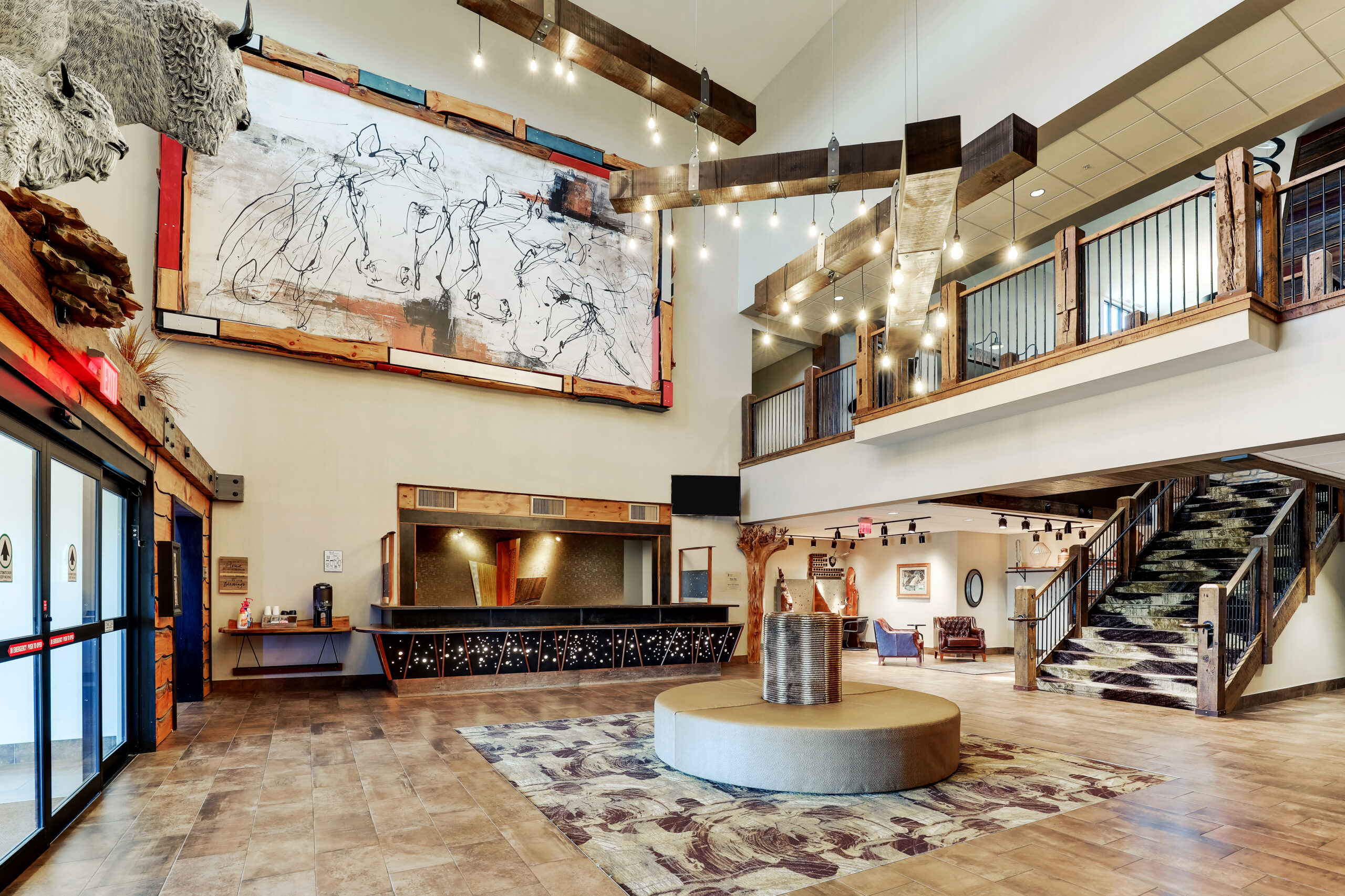
Stoney Creek Hotel Lobby

Management Services vs Brand Development: Understanding Your Options

When working with a hotel management company, owners usually have more than one operating path depending on their goals, market, and investment strategy.

Independent Hotel with Professional Management

Some owners choose to operate independent hotels while partnering with a management company for daily operations, revenue strategy, staffing, and sales support. This approach allows full flexibility in branding and guest experience while still benefiting from professional hotel operations.

You can learn more about Embergrove’s approach to independent hotel operations through their hotel management services

Develop with a Proven Regional Brand

Other owners prefer to develop with a recognizable hospitality concept while maintaining flexibility at the market level.

Through Embergrove Hospitality Group, owners also have the option to develop and operate under the Stoney Creek Hotel brand, a proven regional concept designed for Midwest travel markets. This path provides brand consistency, established guest experience standards, and full service management from opening onward.

If you are evaluating brand supported development options, you can explore how to
build a Stoney Creek Hotel

Choosing a Partner That Fits Your Long-Term Strategy

The best management partner is not always the largest or most recognizable. It is the company that:

  • Understands your specific market

  • Communicates clearly and consistently

  • Aligns with your investment goals

  • Brings operational discipline without unnecessary overhead

For Midwest owners, regional management companies often provide a combination of professional systems and local insight that supports long term performance and asset value.

Whether your project is independent or brand supported, aligning development and operations under one experienced partner can reduce friction and improve outcomes over the life of the asset.

Next Steps for Owners and Developers

If you are evaluating management partners, planning a new hotel development, or comparing brand and operating models for your market, there are multiple paths available depending on your goals.

You can start by reviewing Embergrove’s hotel management services

or by exploring opportunities to develop with the Stoney Creek brand

Both options begin with an introductory conversation focused on market fit, timing, and long term performance.

Pirates Aren’t The Only Ones With a Business Strategy

Cannonballs > Bullets.

In his book Great by Choice, Jim Collins develops the concept of making calculated tests and experiments into what he calls Firing Bullets, Then Cannonballs. He uses imagery reminiscent of a “Pirates of the Caribbean” movie. Imagine you are at sea, and a hostile ship is bearing down on you. Your ship has a limited amount of gunpowder. So, you use gunpowder to fire a cannonball at the ship. It fires out and over the hostile ship, missing the target. Turning to the stockpile of gunpowder, you realize the ship is out of gunpowder. It’s all been used to fire that one cannonball.

What If?

What would have happened if the ship’s crew had used the limited gunpowder to fire a bullet, recalibrate their aim, and fire another bullet until they hit the ship? Then they could have taken the remaining gunpowder and fired a cannonball along the same pathway for a direct hit. BOOM!

In large corporations today, it’s easy to get hung up on the BHAGs – Big Hairy Audacious Goals – a term coined in another of Jim Collin’s classics, Built to Last. Something commonly missed when focusing on the larger aspirations is where and when resources are dwindling. This could be something as literal as funding or something as present as employee burnout. Where and how we are directing our attention at Embergrove Hospitality is important for not only our constant progression but also our longevity as a company.

Our Calibration Strategy

In this particular business concept, a bullet is a test, or experiment, that is low-cost, low-risk, and low-distraction. These are used to determine what will work. With each bullet (test) fired, you calibrate your line of sight by firing additional bullets. Once you have all the information you need and the data and experience to prove your test, you fire a calibrated cannonball. Now, we can concentrate our resources into a big, data-driven bet. This process turns small proven ideas (bullets) into those big hits (cannonballs).

Bullets and cannonballs are used daily at Embergrove Hospitality. It is part of our shared language and behavior. We believe that the best solutions for our business come from within the company. Every job is important, and every team member has thoughts and ideas. As we work together in each department and collaborate cross-departmentally, we encourage our staff to embrace this concept in preparation for every task at hand. Is this a cannonball, or just a bullet? How should I devote my attention, and how much planning is necessary? As we work to bring new and innovative ideas to the table, we do our best to take a step back, put on our pirate thinking cap, and see each goal for what it is.

3 Hospitality Lessons We’ve Learned From the Outdoors

A love of the outdoors runs deep at Embergrove Hospitality, all the way back to our earliest days and our very first hotel. This affinity for the great outdoors guides more than our aesthetic choices and our brand identity, though. We are hikers and mountain bikers, campers and trail runners, and we’ve learned a thing or two along the way from this time spent in nature. Here are the lessons our team members have gleaned from our outdoor adventures — and how we apply them professionally, every day.

Lesson 1: The Importance of Planning

“Anyone who’s spent time outdoors knows that preparation is key, whether it’s packing the right gear for a long trail run or mapping out your route ahead of time,” says Mark Creger, Embergrove’s chief revenue officer. Creger knows you can’t get caught in a mountain pop-up storm without your rain gear, or find yourself stranded on a trail without a spare bicycle tube. The key is to be prepared for whatever comes your way — to always be ready for the unexpected.

“Nature can be unpredictable, and the same goes for hospitality,” Mark says. “In our hotels, we focus on planning for all scenarios, whether it’s preparing for a sudden influx of guests, an event that runs longer than expected, or a weather issue that affects outdoor activities. It gives us the flexibility to handle any situation, which ultimately creates a better experience for our guests.”

Lesson 2: The Importance of Adaptability

Mother Nature can throw a lot of curveballs, and curveballs are something we hospitality professionals know a thing or two about. The key to making it work — whether out in the woods or behind the front desk — is to be as adaptable as possible, and to know when to pivot.

“Nature constantly reminds us that things don’t always go according to plan,” says Travis Weiderien, chief development officer at Embergrove. “I’ve had days where I set out for a hike and suddenly the weather changes or the trail I planned for is closed. You have to adapt on the fly.”

In hospitality, it’s the same — guests’ needs can change in a moment, and being able to pivot quickly is essential. “Whether it’s a last-minute room request, dietary adjustments for an event, or unexpected maintenance, we’ve learned to stay flexible and roll with the punches,” he says. “Adaptability isn’t just about being reactive; it’s about anticipating needs before they arise, staying nimble, and always having a solution ready.”

Lesson 3: The Importance of Simplicity

Any Eagle Scout worth his salt will tell you that less is often more. You need to come prepared, of course, but you also need to stick to the essentials. It’s easier to “leave no trace” when you’re packing light — when you’re keeping things simple.

It’s in this simplicity that we often find the greatest meaning in the outdoors. “Some of my best outdoor experiences have been the simplest ones — sitting by the creek in the morning, biking up the hill to watch the sunset, or just taking a walk through the woods,” says Tessa Hansen, Emergrove’s director of marketing. “It’s a reminder that things don’t always have to be complicated to be meaningful.”

In our hotels, we maintain that same philosophy. “It’s about finding the balance between offering guests the essentials they need for comfort, without overwhelming them with too many frills,” Tessa says. “Sometimes, the simplest touches — like a clean, cozy room or a well-designed space — can make all the difference.”